An interactive exhibition installation that combines projection mapping with physical touchpoints and a tactile dial to explore the history, chemical effects, and subjective experiences of LSD.
Created for the "Media Technology" course at HfG Schwäbisch Gmünd, this project investigates how physical computing and digital interfaces can make abstract and complex topics accessible in public spaces. By designing a custom interactive installation that combines an analog controller with digital projection, the exhibition installation educates visitors on the history, physiological effects, and subjective experiences of LSD from a neutral perspective.
The Challenge
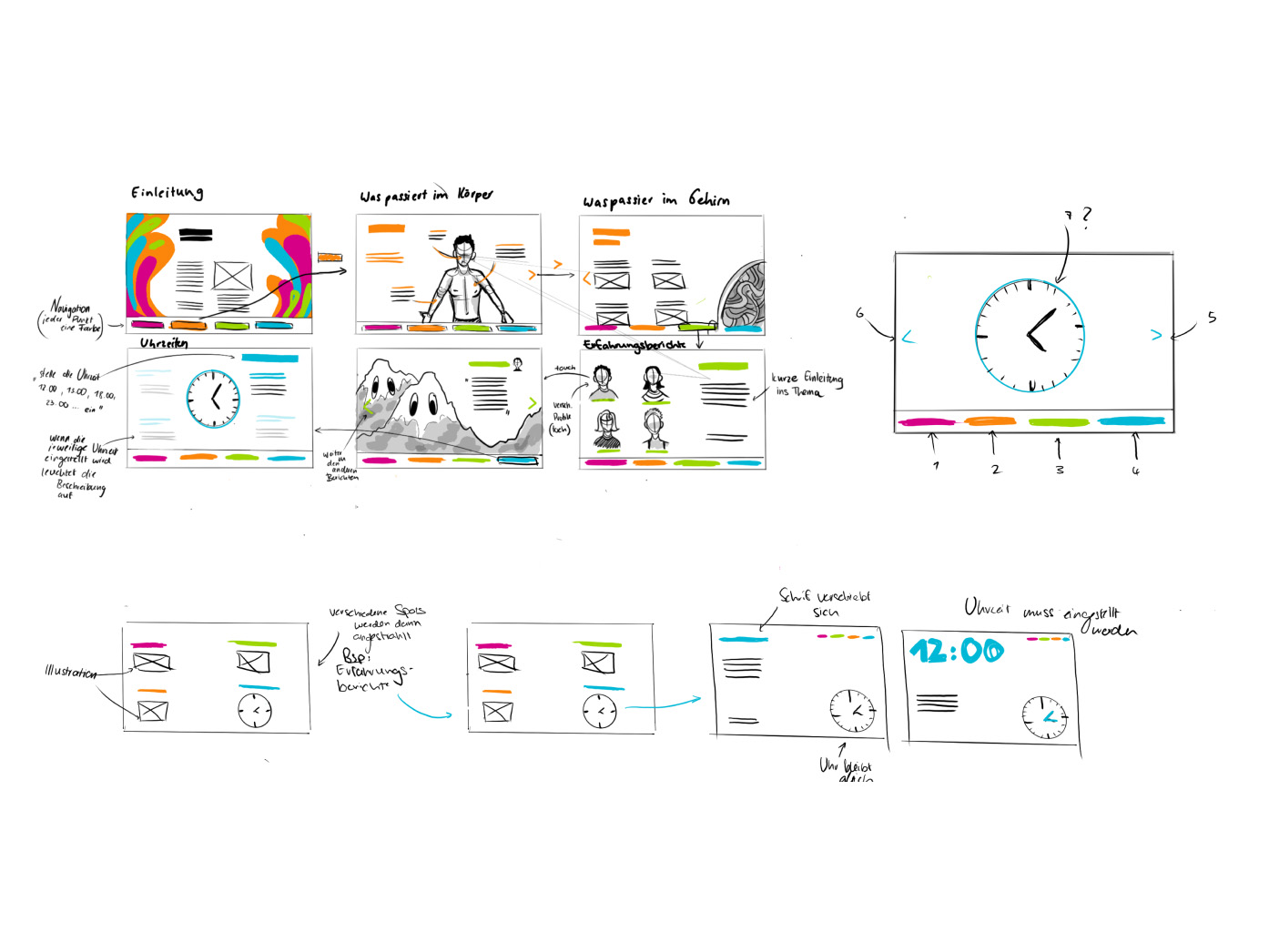
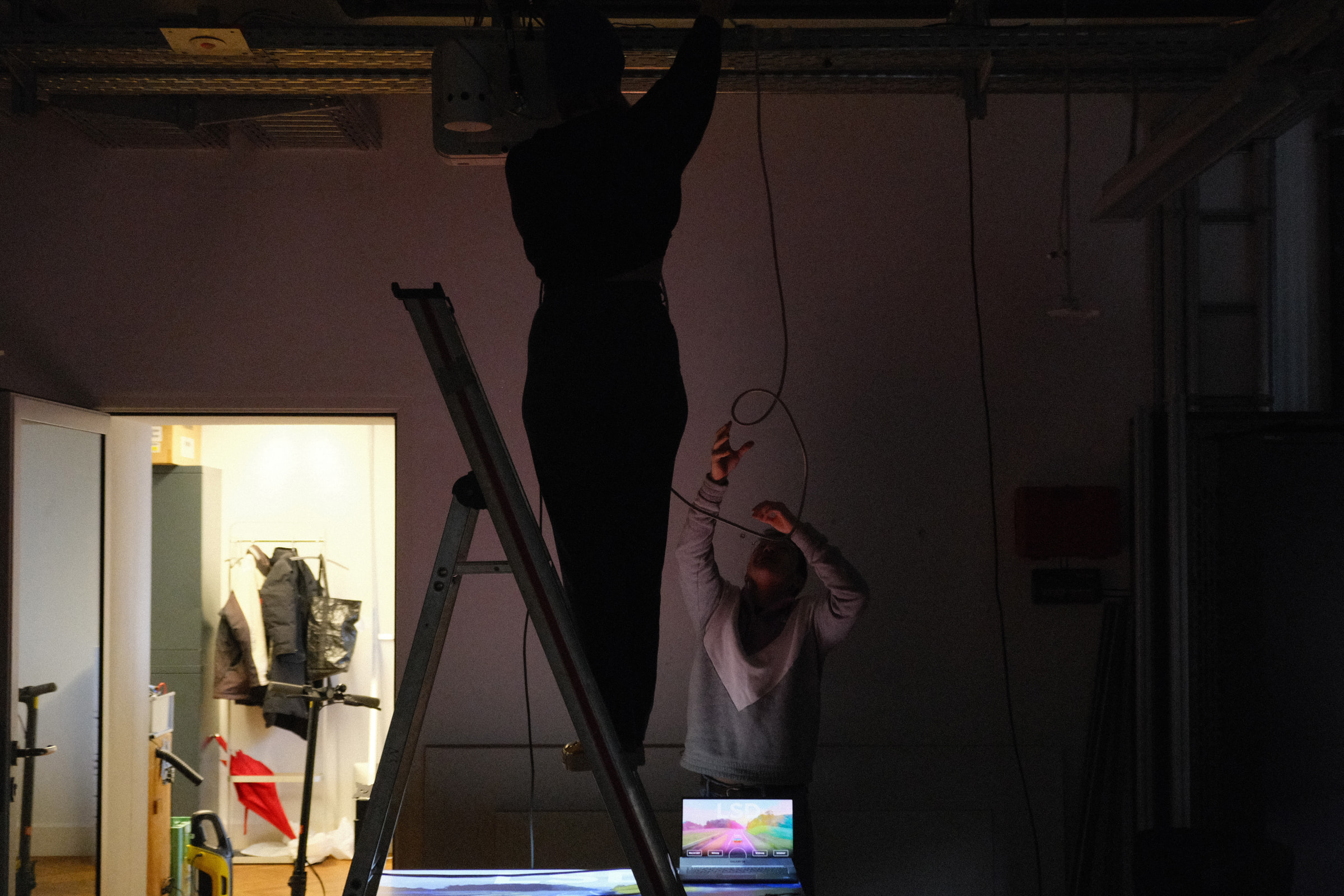
The primary objective was to construct an engaging and educational experience while bridging the gap between physical elements and digital screen content. The system needed to map data — such as the five distinct phases of an LSD trip and subjective user reports — onto a shared spatial UI. Furthermore, the installation faced physical constraints: no modifications or holes could be drilled into the exhibition table, requiring a completely non-destructive mechanical solution for the controls. Technologically, the system had to reliably translate physical inputs into keyboard events to control a Figma web prototype without latency or connection drops.
The Process
The development began with an in-depth review on the history of hallucinogens, starting from Albert Hofmann's discovery of the molecule in 1938/1943, to its medical use in the 1950s, its cultural explosion in the 1960s, and its modern scientific renaissance.
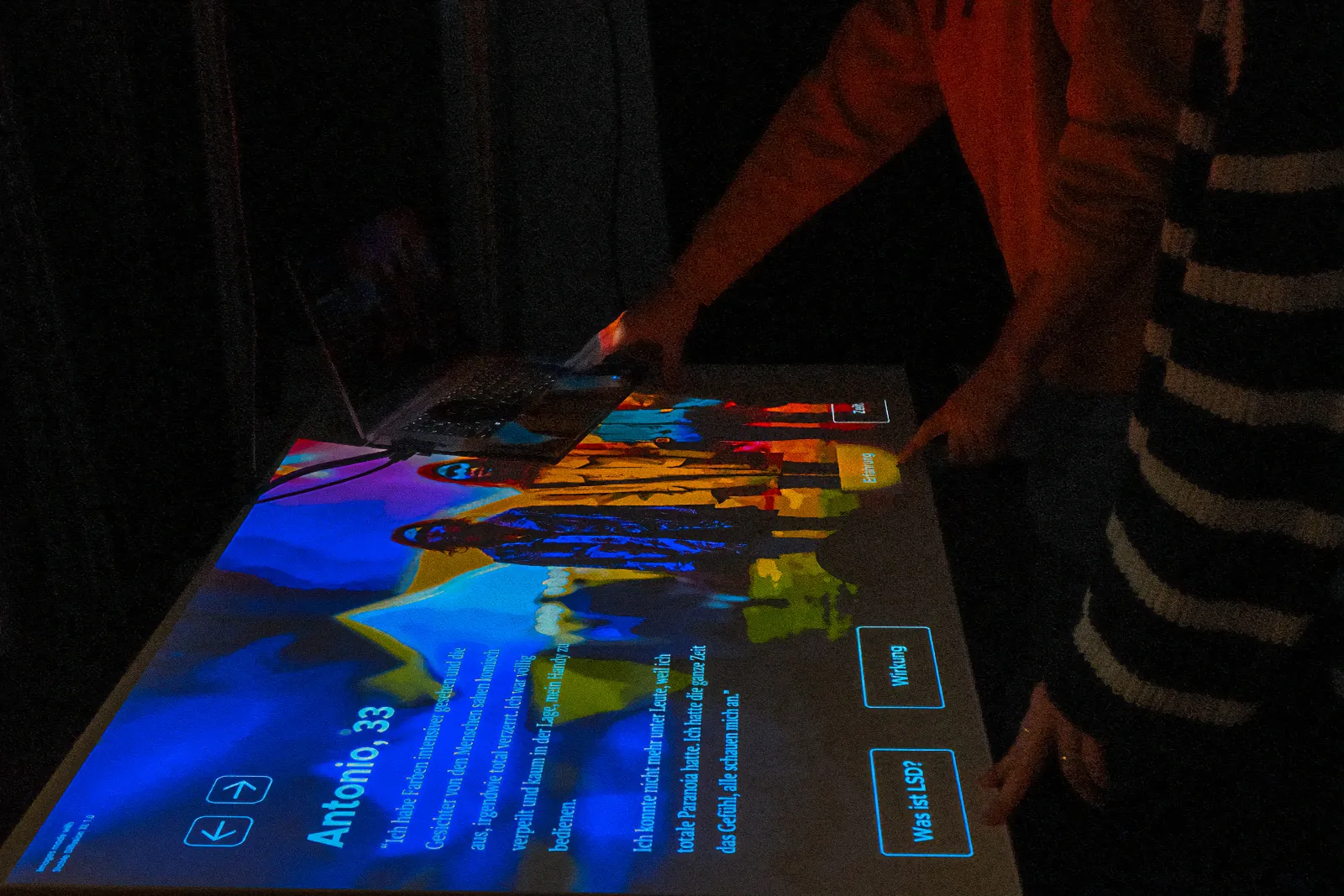
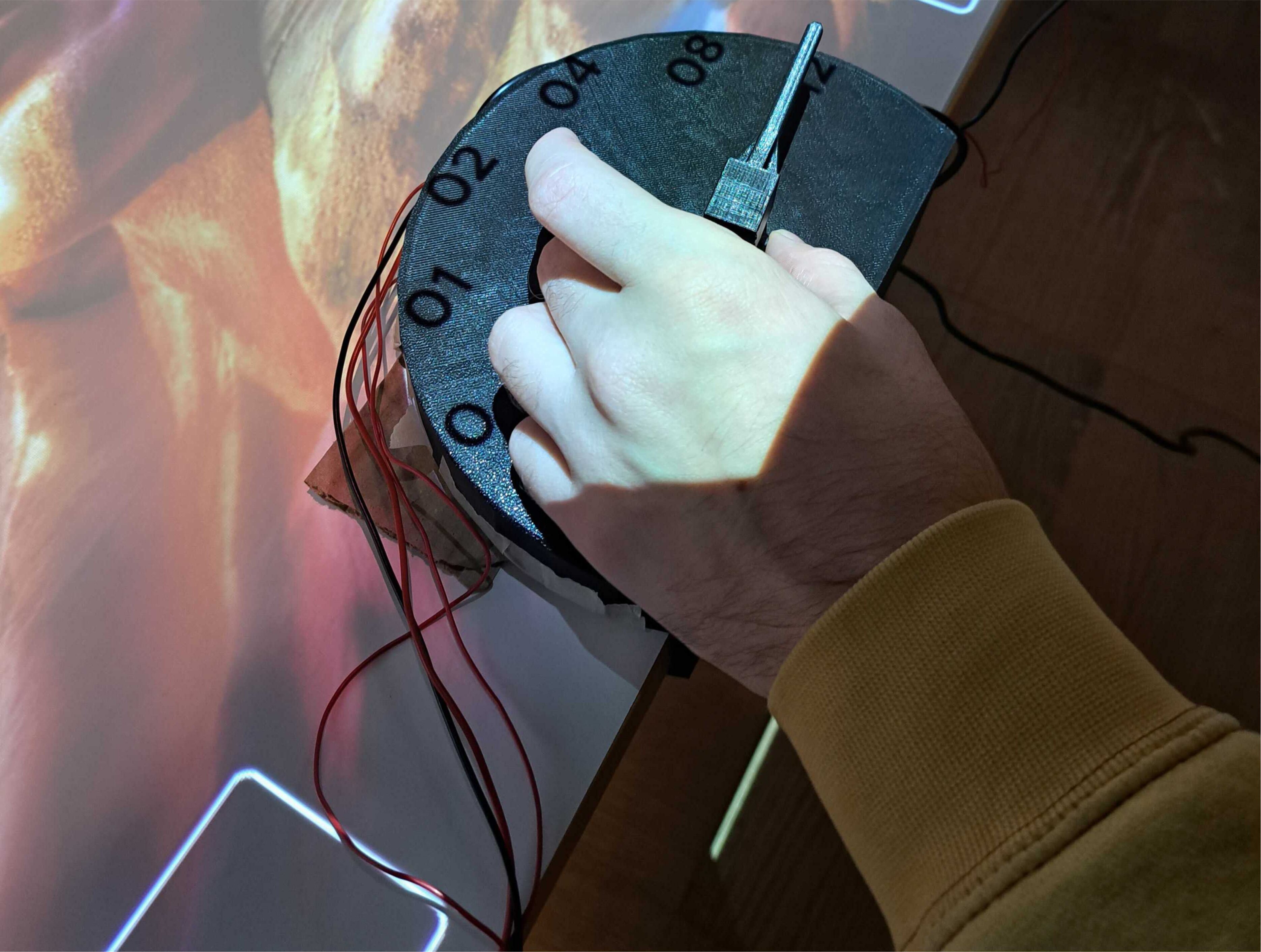
To bridge the physical and digital, the interaction was split into a dual-navigation system: primary chapter navigation was built using capacitive copper foil applied underneath the table surface — acting as four invisible, touch-sensitive buttons that trigger keystrokes via Arduino to control the Figma prototype. A physical, 3D-printed rotary dial was engineered to slide over the table edge, serving exclusively in the final chapter to navigate through the chronological timeline.
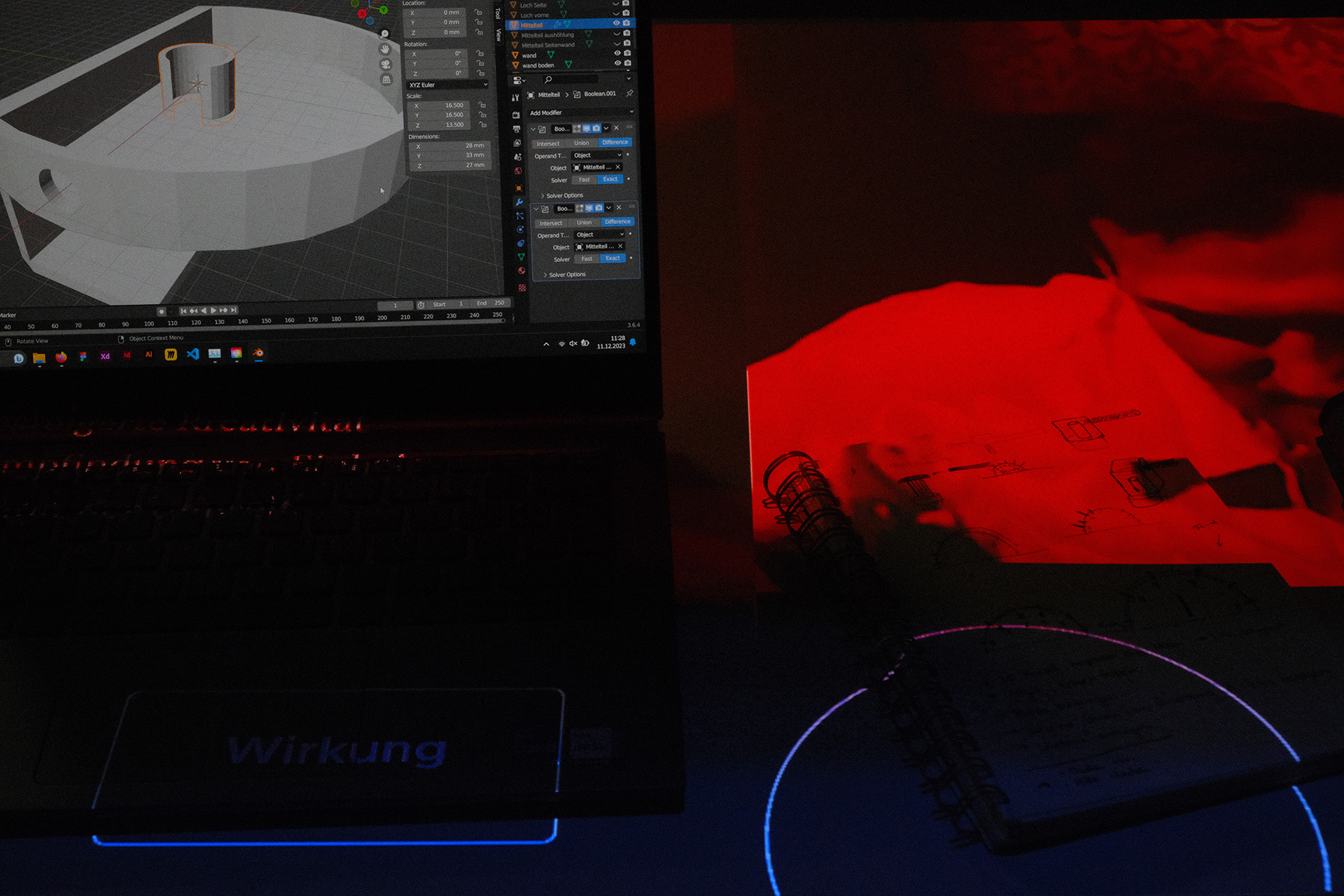
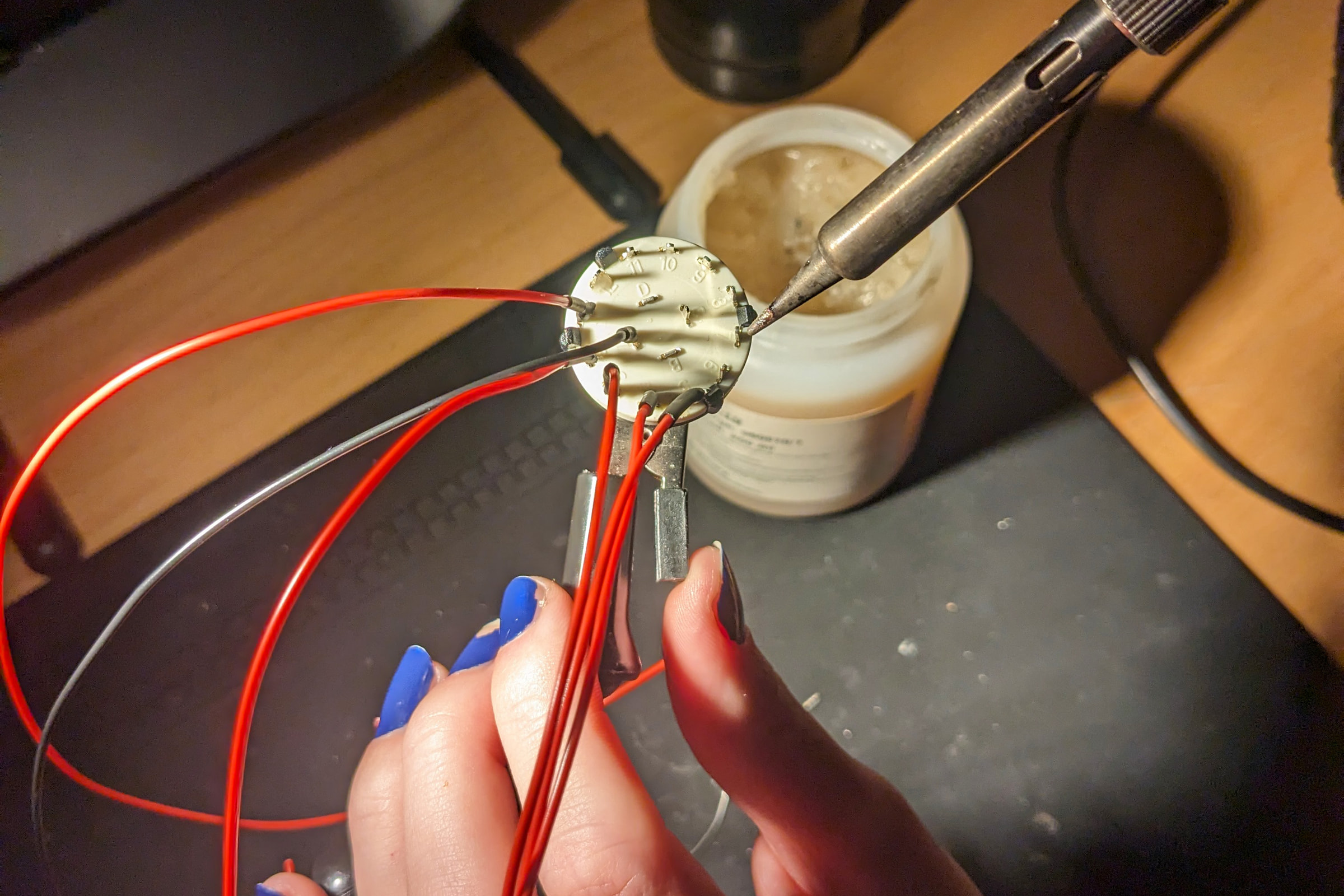
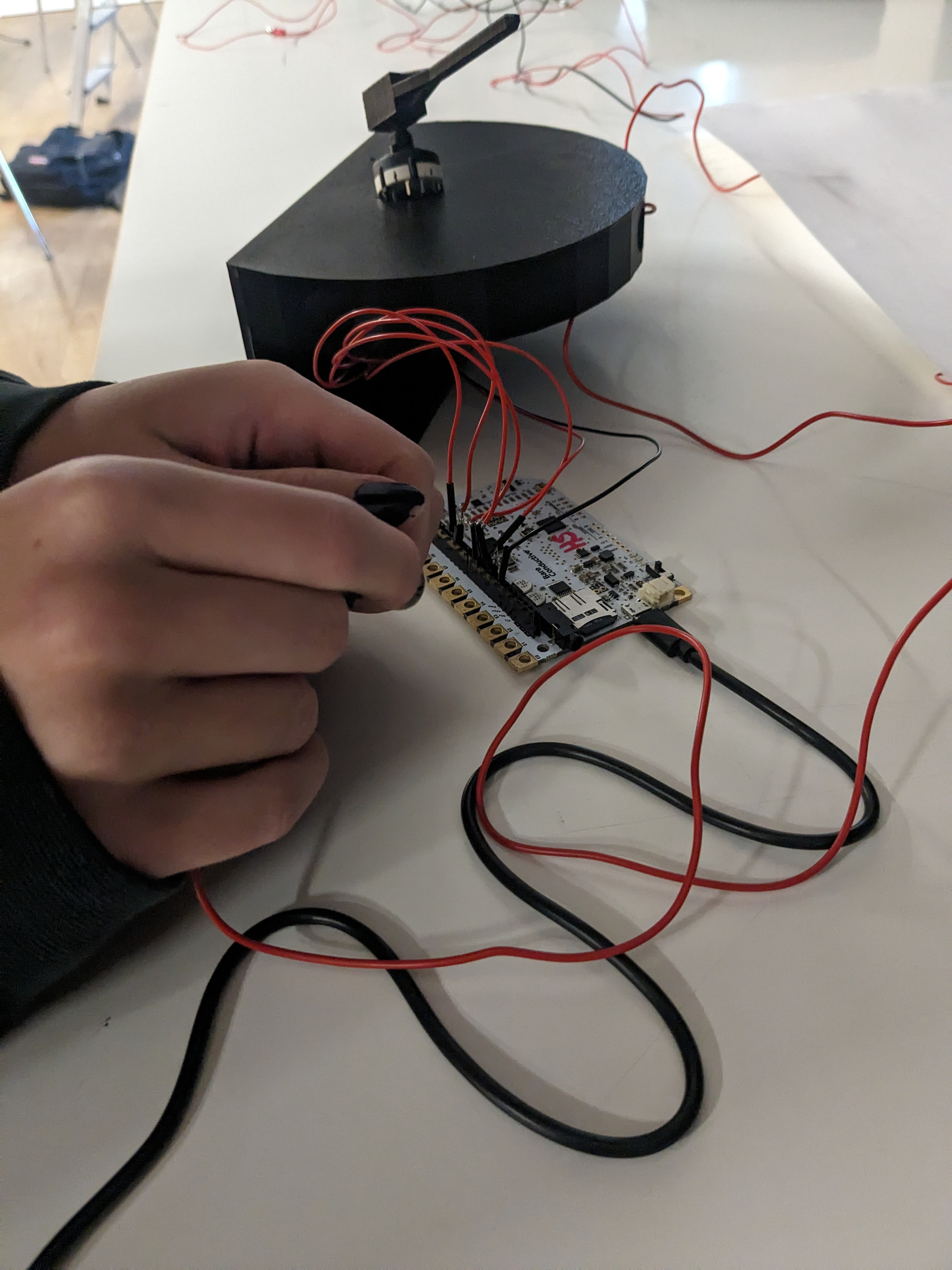
The interaction architecture separates the navigation mechanisms based on context:
- Capacitive Touchpoints: Under the table's surface, copper wiring was laid out to act as capacitive touchpoints corresponding to projected menu items at the bottom edge of the table. These were wired to a Bare Conductive Touch Board (an Arduino-compatible microcontroller). The board was programmed to run as a USB HID keyboard, emulating specific keystrokes upon touch registration to navigate between the Figma prototype slides.
- Physical Dial Navigation: A physical dial (utilizing a rotary potentiometer) was used to control the timeline of the trip. During the initial phases, the dial remains unlit by the projector, blending into the dark background and remaining invisible. It is only illuminated and activated in the final chapter to navigate through the chronological progression.
The layout employs a bold typography system, pairing the clean, high-impact sans-serif Metropolis Bold with the legible serif PT Serif Regular. To represent subjective psychological effects, the generative AI Stable Diffusion was used to create visuals based on real experience reports. The UI buttons were designed to invert color upon contact, providing instant feedback. To capture the psychedelic character, both the UI elements and the imagery utilize a highly colorful palette rich in neon tones.
The Solution
The final installation is an interactive, spatial exhibition table structured into four distinct chapters:
- Chapter 1: LSD in General: Focuses on the origins and discovery of the substance and the timeline of the drug's medical, cultural, and legal history.
- Chapter 2: Physiological Effects: Explores physical reactions — such as elevated body temperature, dilated pupils, and increased blood pressure — using icons, graphics and illustrations.
- Chapter 3: Subjective Experiences: Visualizes first-hand accounts of LSD trips. Illustrations are mapped to specific testimonials to visually represent the sensory distortions and psychological effects described by users.
- Chapter 4: Chronological Trip Progression: An immersive timeline tracking a trip over a 12-hour period. In this chapter, the physical dial is illuminated by the projection, allowing visitors to go through five stages (onset, ascent, peak, descent, and after-effects). The timeline is synchronized with historical audio-visual documentary records from 1950s clinical trials, tracing the trip progression of a painter and a "housewife."
Impact & Reflection
This project showed the potential of physical computing to turn passive learning into an active, exploratory experience. By integrating physical inputs with projection mapping, the installation creates a technology environment where visitors interact directly with physical objects rather than looking at traditional screens. The hands-on assembly offered valuable insights into product design and the diverse applications of prototyping. The resulting installation successfully translates scientific data and subjective experiences into an interactive public narrative.
More Projects