Reimagining the music experience through a musicplayer app that adapts in real-time to the user’s bio-data, activity, and emotional state.
Moodify is a speculative digital product designed to bridge the gap between emotional mood, physical signals, and listening to music. By drawing on biometric data - such as heart rate and activity levels - and everyday information from connected accounts, the application automates the creation of hyper-personalized playlists, transforming music from a static choice into a dynamic companion.
The Challenge
The core problem identified with modern music players is what we called the "playlist fatigue" - the significant effort required to find or create the right soundtrack for a specific, often fast vanishing moment. The objective was to design a system that captures real-time "situational" data to eliminate manual selection while maintaining a high degree of user trust and emotional resonance. Additionally, the challenge involved creating a visual language that could reflect an infinite spectrum of moods without becoming overwhelming or cluttered.
The Process
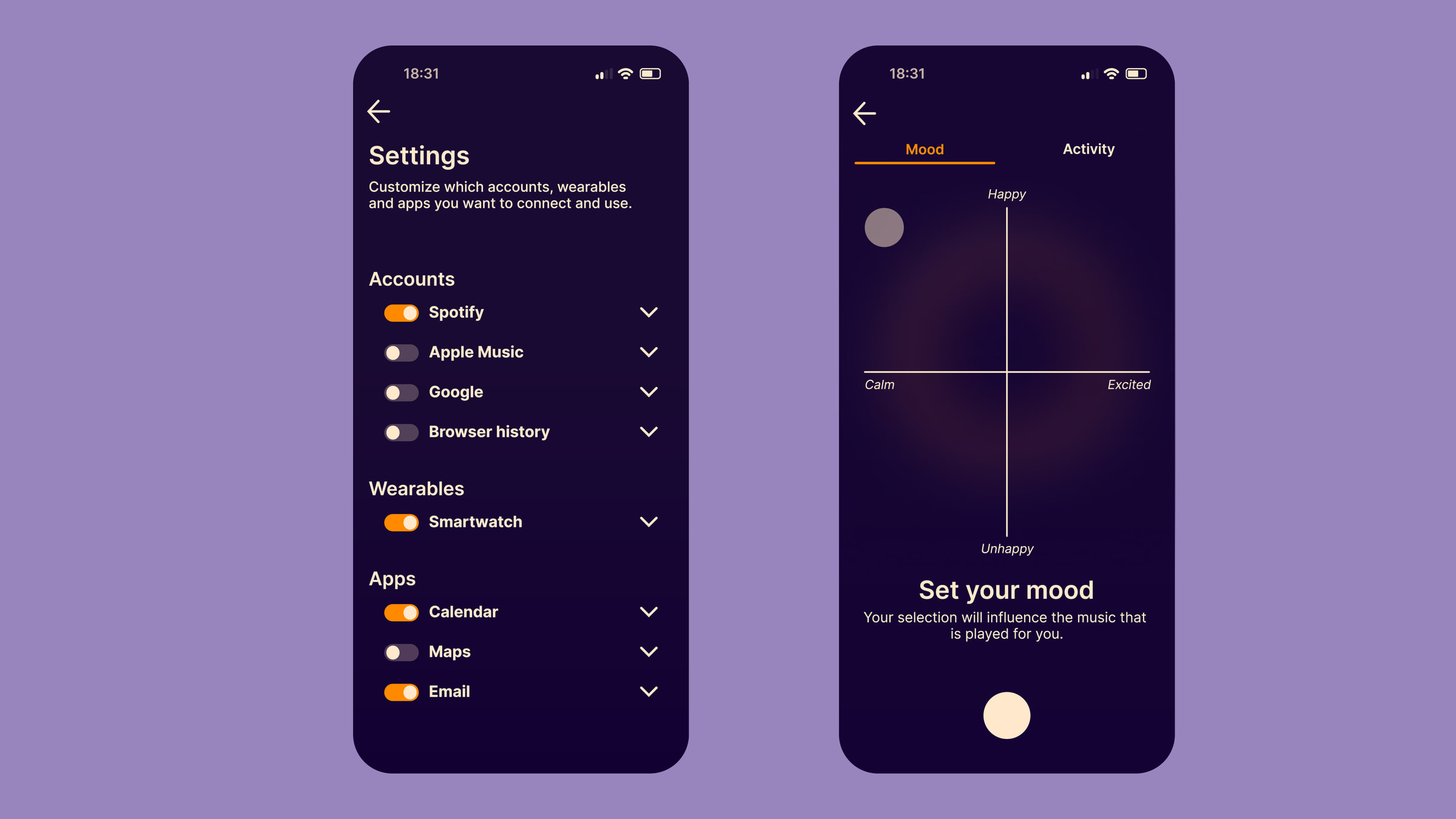
The development followed a "3-Phase-Structure" (Before, During, After listening), ensuring a holistic user journey. The logic was centered on what we call the "Controlled Automation," allowing users to either provide manual input and/or sync biometric data (heart rate, skin conductance, activity). Playback can also be adjusted manually at any point while listening - for example by directly setting one's mood through the "Moodshape" - to instantly adapt the soundtrack to a new mood.
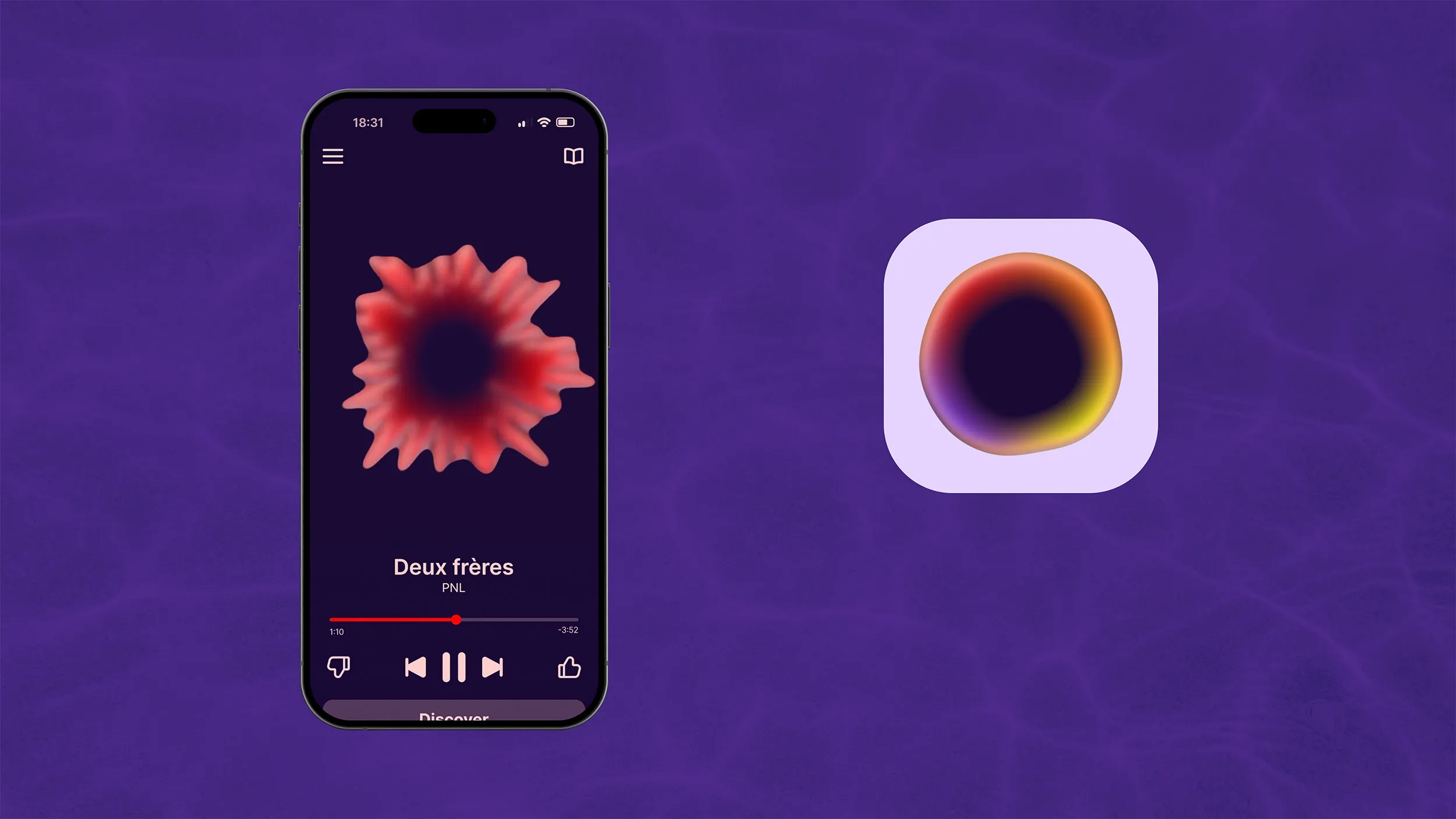
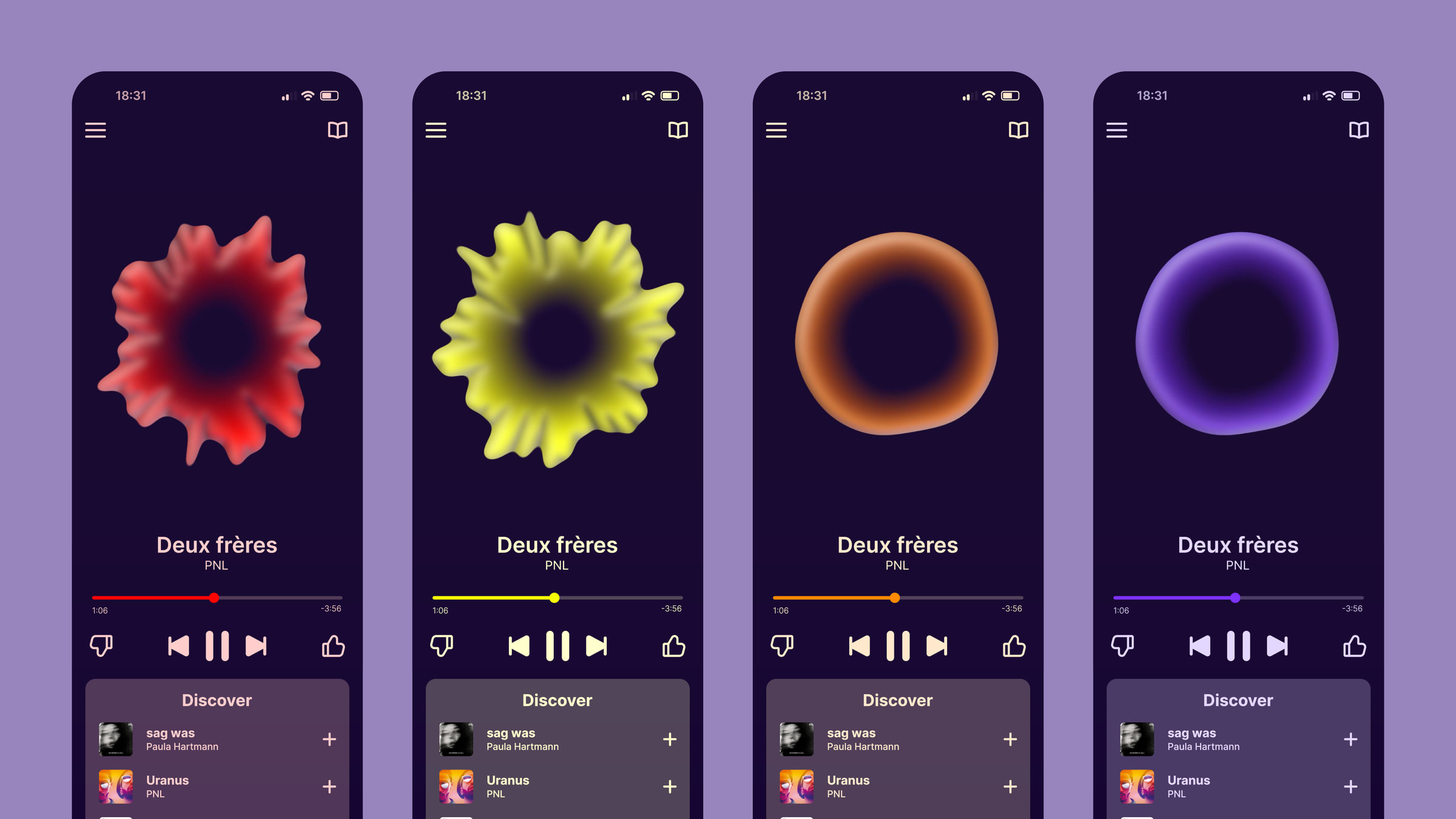
The focus point of the app is the Moodshape - a generative, abstract visual element that serves as the UI's focal point. Using Adobe After Effects, a morphology of shapes was developed: round and slow-moving for "Calm/Happy" states, and wavy, rapid animations for "Energetic/Stressed" moods. This creates a visual feedback loop that anchors the user’s emotional state within the interface.
The Solution
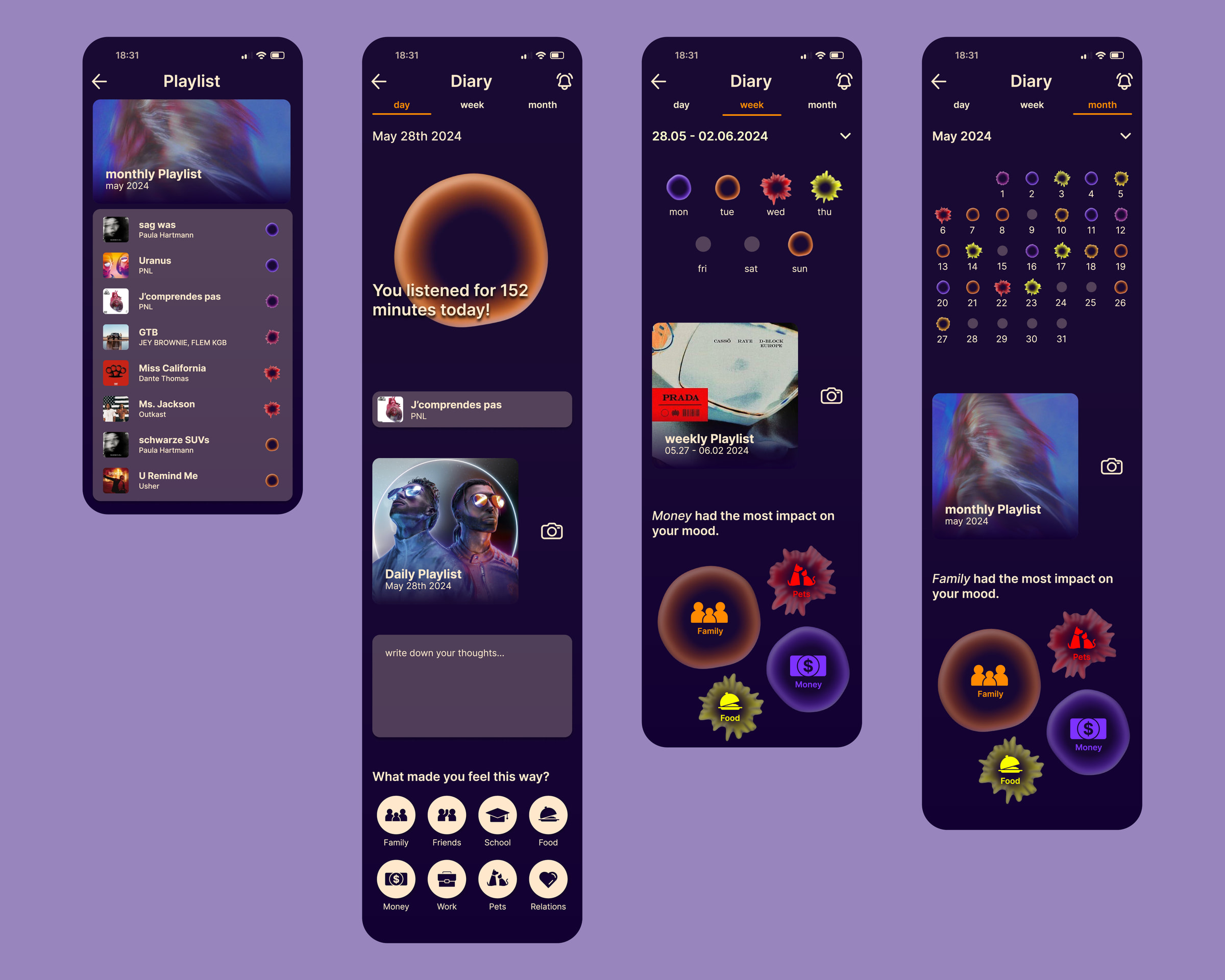
Moodify delivers a minimalist, dark-themed UI that prioritizes generative visuals over complex navigation. The centerpiece is the Music Player, which dynamically adjusts genre, tempo, and visuals in real-time. Post-listening, the Music Journal automatically archives these sessions, creating a "music diary" that visualizes emotional trends over days, weeks, or months. This ecosystem ensures that music is not just heard, but preserved as a record of the user's personal journey.
Impact & Reflection
This project explores the intersection of AI, bio-data, and human emotion. It highlights how digital products can shift from passive tools to proactive companions by utilizing speculative technology. The implementation of a modular design system, combined with a narrative structure, demonstrates that complex, data-heavy applications can remain intuitive and engaging through minimalist design.
More Projects